

Itaya Hazan’s 1914 Hōkō-sai Ceramic Vase
Updated: Apr 30
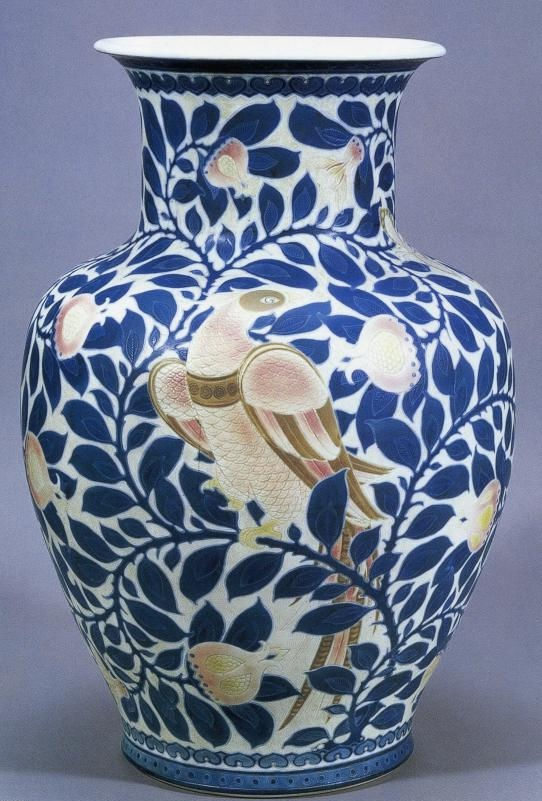
Bathed in a soft, almost internal glow, this porcelain vase pulses with a sense of gentle stillness. Among curling branches and stylised leaves, a bird perches calmly—its feathers rendered with such delicate gradation that it seems to breathe against the surface. Each leaf and blossom is carved and colored with care, layered beneath a translucent glaze that diffuses light like mist at dawn.
Created in 1914, this ceramic vase is a prime example of Itaya Hazan’s (板谷波山) most celebrated innovation: Hōkō-sai (葆光彩), or 'preserved light colouration'. Unlike the bold, glossy overglaze enamels of traditional Kutani or Arita wares, Hazan’s Hōkō style embraces a muted, atmospheric quality, achieved through carving into the clay body, applying delicate pigments, and encasing them in a thin, matte glaze. The result is a surface that does not simply display colour—it holds and diffuses it, much like ancient Chinese monochromes or soft pastel paintings.
Hazan was a revolutionary figure in Taishō-era ceramics, credited with introducing art nouveau sensibilities and fine art philosophy into the world of Japanese porcelain. Rather than producing utilitarian vessels or export-oriented wares, Hazan treated ceramics as sculptural art, equal to painting or calligraphy. His motifs—birds, flowers, clouds—were never decorative alone; they conveyed mood, season, and poetic resonance.
This particular vase, with its rhythmic foliage and central bird, draws from traditional 'kin-ka-mon' (禽花文, bird-and-flower) themes, yet the treatment is unmistakably modern. Everything flows—not with rigid symmetry, but with natural movement and breath. Hazan’s genius lies not in flamboyance, but in his ability to balance precision and softness, structure and stillness.
More than a vessel, this is a moment suspended in glaze—a harmony of form, colour, and quiet beauty.
🍵 If you appreciate wabi-sabi aesthetics and timeless rustic simplicity, take a look here: https://engicrafts.etsy.com
🧵 Or if you’re looking for versatile components to bring your own designs to life, explore here: https://yumesupplies.etsy.com


Comments